

Navigating Australia's diverse cultural landscape
Explore the rich tapestry of cultures and diverse backgrounds shaping contemporary Australian society. This page offers insights, research, and practical strategies for early childhood educators to foster inclusive and supportive environments for all children and families.

Understanding the context: Cultural and diversity insights
Cultural diversity in early childhood education is not only about including different foods, clothes, flags or songs. It is about understanding how children’s identities are shaped by culture, language, family history, migration, colonisation, racism, belonging and community connection. In Australia, this context is especially important because early childhood services work with First Nations families, immigrant families, refugee families and asylum seeker families. The 2021 Census showed that 27.6% of Australia’s population was born overseas, and 48.2% had at least one parent born overseas, which shows that cultural diversity is not a small or separate issue but part of everyday Australian society (Australian Bureau of Statistics [ABS], 2022).
For Aboriginal and Torres Strait Islander children and families, cultural diversity must be understood through the history of colonisation and forced child removal. Grace and Menzie (2022) explain the Stolen Generations as an example of cultural hegemony, where dominant systems decided what was “best” for Aboriginal and Torres Strait Islander children while ignoring family, kinship, Country, culture and community authority. This links to conflict theory because it shows how powerful institutions can define whose culture is valued and whose knowledge is pushed aside. For early childhood educators, this means that family mistrust of services should not be judged as “lack of engagement”. It may reflect historical and ongoing experiences of control, exclusion and trauma (Grace & Menzie, 2022).
For immigrant, refugee and asylum seeker families, cultural diversity can also be shaped by migration pathways, displacement, language barriers, separation from family, visa insecurity and resettlement stress. The Department of Home Affairs explains that settlement information supports skilled migrants, family migrants, refugees and humanitarian entrants with areas such as education, health, housing, employment and language services (Department of Home Affairs, 2024a, 2024b). Cologon and Hayden (2017) also show that children in fragile contexts may experience instability, disrupted relationships and interrupted access to safe communities. Therefore, educators need to see cultural diversity not as a “special event”, but as part of children’s daily wellbeing, learning and sense of safety.

Impact on children and families: Nurturing every child
The impact on children can be deep, even when it is not obvious. A child who is quiet, hesitant or withdrawn may not lack ability; they may be learning a new language, reading unfamiliar social rules or recovering from stressful experiences. Children from refugee backgrounds may need predictable routines, secure relationships and gentle transitions because their early lives may have included fear, waiting, loss or sudden change (Cologon & Hayden, 2017). Similarly, First Nations children may feel unsafe or invisible if early childhood services only use tokenistic Aboriginal symbols but do not build respectful relationships with local Aboriginal communities (Grace & Menzie, 2022; Reconciliation Australia, 2021).
Cultural exclusion can also affect identity and belonging. If children never see their language, family structure, skin colour, food, stories or community represented in the environment, they may begin to feel that their background is less important. This can affect confidence, peer relationships and engagement in learning. Families may also avoid services if they feel judged, misunderstood or unable to communicate. Therefore, early childhood services must create culturally safe environments where families are not expected to become “the same” as everyone else, but are respected as knowledge holders about their own children.

Social policy and Australian responses: Frameworks for inclusion
Australian policy responses show that cultural diversity requires partnership, not just service delivery. Closing the Gap places partnership with Aboriginal and Torres Strait Islander people at the centre of reform, with Priority Reforms focused on changing how governments work with First Nations communities (Closing the Gap, n.d.). This is highly relevant to early childhood practice because services should not simply add Aboriginal content without consultation. They need to work with local Elders, Aboriginal organisations and families.
Reconciliation Australia (2021) also promotes reconciliation as practical action, including relationships, respect and opportunities. In an early childhood setting, this can influence practice through Reconciliation Action Plans, local community partnerships, anti-bias curriculum and respectful Acknowledgement of Country. For migrant and refugee families, the Department of Home Affairs provides settlement information and language services to support access to education, health, housing and community participation (Department of Home Affairs, 2024b). These policies matter because educators cannot support children properly if families cannot understand enrolment information, communicate concerns or access wider services.
Strategies for practice: Building inclusive communities
- Build culturally safe enrolment conversations. Educators can ask families about language, routines, cultural practices, family structure and communication preferences without judgement.
- Embed First Nations perspectives through genuine consultation. Services should work with local Aboriginal organisations or Elders rather than relying only on posters, flags or one-off activities (Reconciliation Australia, 2021).
- Use multilingual and visual communication. Translated notices, visual routines, bilingual books, interpreters and family language displays can help children and families feel included (Department of Home Affairs, 2024b).
- Use anti-bias curriculum in everyday moments. If a child says “that food smells weird” or “you talk funny”, educators can calmly teach respect, curiosity and fairness.
- Use trauma-informed practice. Predictable routines, quiet spaces, emotional language, gentle transitions and trusted educator-child relationships can support children affected by removal, migration or displacement (Cologon & Hayden, 2017; Grace & Menzie, 2022).
Community and Professional Partnerships
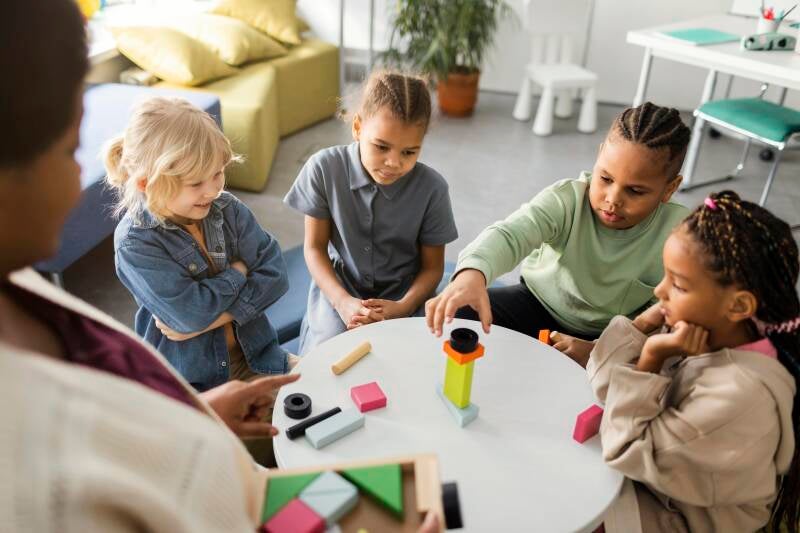
Five useful partnerships include local Aboriginal community-controlled organisations, which can guide culturally respectful practice; migrant resource centres, which support settlement and family connection; refugee health services, which assist families affected by trauma or disrupted healthcare; interpreters and bilingual workers, who support communication; and family support services, which can help with housing, parenting, legal referrals and social connection. These partnerships are important because educators should not make assumptions about family needs. They should work with families and communities in respectful, practical ways.
Resources for Educators and Children
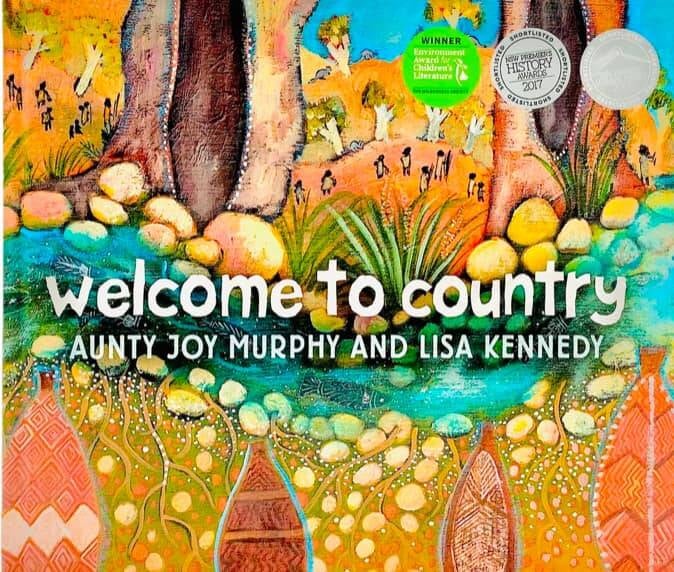
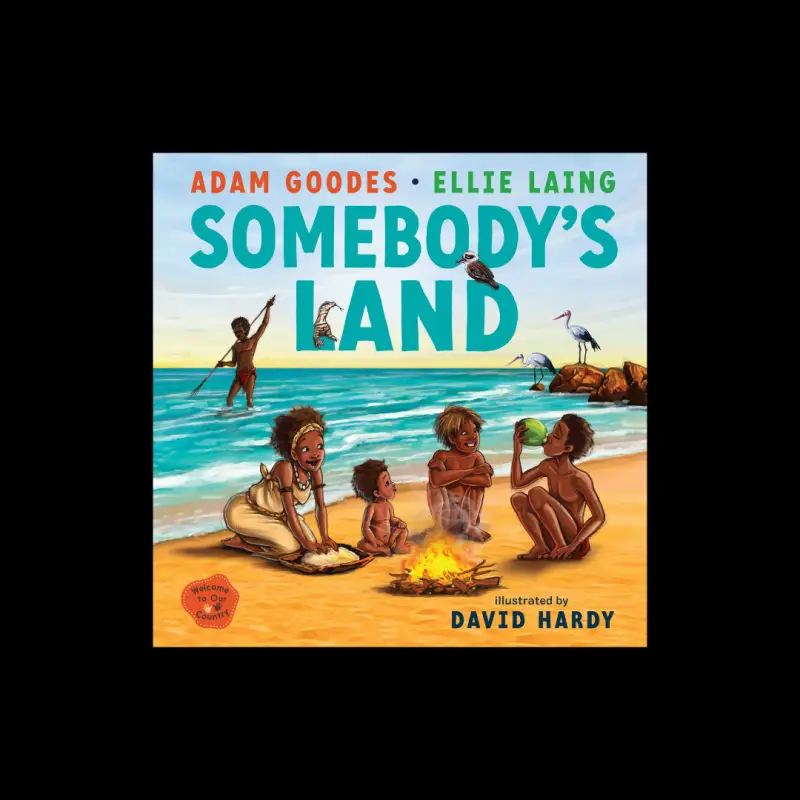
Four useful projects or websites are Closing the Gap, Reconciliation Australia, Department of Home Affairs settlement information, and Parliament of Australia information on asylum seekers and refugees (Closing the Gap, n.d.; Department of Home Affairs, 2024b; Parliament of Australia, 2015; Reconciliation Australia, 2021). Four children’s books are Welcome to Country by Aunty Joy Murphy and Lisa Kennedy, Somebody’s Land by Adam Goodes and Ellie Laing, My Two Blankets by Irena Kobald, and The Little Refugee by Anh Do and Suzanne Do. These books can help children discuss Country, belonging, fairness, language and kindness. Four media resources could include Play School episodes with Aboriginal and Torres Strait Islander perspectives, ABC Kids cultural celebration videos, child-friendly refugee stories, and songs in children’s home languages. Educators can use these resources to ask simple but deep questions: “What makes someone feel welcome?”, “What languages do we hear in our room?”, and “How can we show respect when families are different?”
Finally, cultural diversity in early childhood education requires more than inclusion language. It requires educators to understand history, listen to families, challenge deficit thinking and create environments where children’s culture, language and identity are treated as strengths.
Create Your Own Website With Webador